
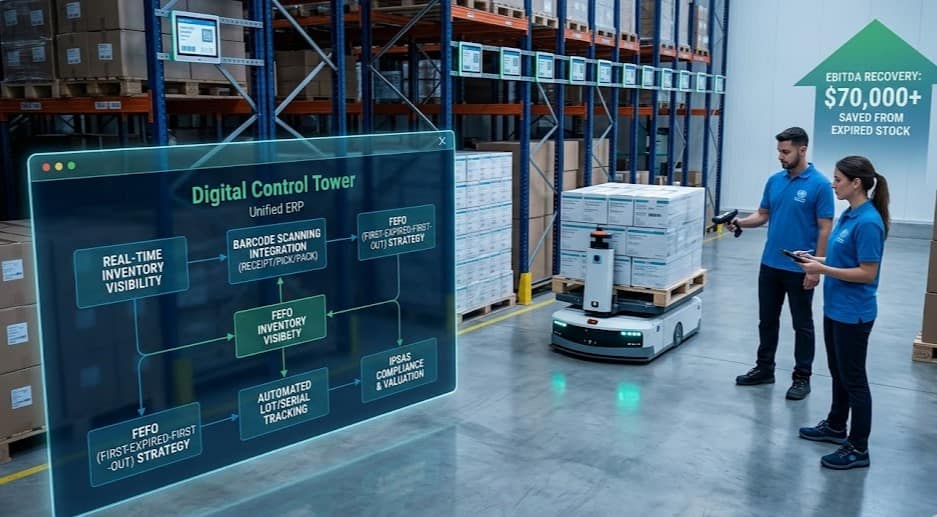


In today’s rapidly evolving manufacturing landscape, technology is the key to staying competitive and efficient. As companies strive for excellence and agility, leveraging sophisticated software tools becomes crucial.
Here’s a look at some essential software types that are revolutionizing modern manufacturing: ERP, MES, CAD, PLM, and SCM. Each plays a distinct but complementary role in ensuring streamlined operations and enhanced productivity.
ERP – The Backbone of Your Operations
Enterprise Resource Planning (ERP) systems are often described as the backbone of modern manufacturing operations. They provide a centralized platform to manage and integrate core business processes, including finance, HR, supply chain, and inventory management.
A robust ERP system consolidates data from various departments into a single source of truth, which enhances visibility and enables better decision-making. For manufacturers, this means real-time insights into production schedules, inventory levels, and order statuses. By automating routine tasks and streamlining workflows, ERP systems reduce manual errors and operational costs.
Moreover, ERP systems can be customized to meet the specific needs of different industries. Whether a company is focused on discrete manufacturing, process manufacturing, or job shop environments, ERP solutions offer scalability and flexibility. Key functionalities include financial management, procurement, production planning, and customer relationship management (CRM), all designed to enhance overall efficiency and productivity.
MES – Real-Time Control on the Shop Floor
Manufacturing Execution Systems (MES) provide real-time control over the shop floor, bridging the gap between enterprise-level ERP systems and the machinery and operations on the ground. MES solutions monitor and manage work-in-progress on the factory floor, offering critical insights into production performance, quality control, and machine efficiency.
An MES enables manufacturers to track production in real-time, making it easier to identify and address issues quickly. For instance, if a machine experiences a malfunction or production slows down, the MES system can alert operators and suggest corrective actions. This immediate feedback loop helps in minimizing downtime and maintaining high levels of productivity.
Additionally, MES systems support advanced features such as real-time data collection, performance analytics, and integration with automation equipment. By leveraging these capabilities, manufacturers can optimize production processes, improve product quality, and reduce waste.
CAD – Designing the Future, One Pixel at a Time
Computer-Aided Design (CAD) software is at the heart of product design and development. CAD tools enable engineers and designers to create detailed 2D and 3D models of products, components, and assemblies. These digital blueprints are essential for visualizing and refining product designs before physical production begins.
CAD software offers a range of features including geometric modeling, simulation, and rendering. Designers can experiment with different design alternatives, assess structural integrity, and simulate real-world conditions to ensure products meet quality and performance standards. This iterative design process helps in identifying potential issues early, reducing the likelihood of costly design changes later in the production cycle.
Furthermore, CAD tools facilitate collaboration among design teams, allowing multiple users to work on the same project simultaneously and share updates in real-time. This collaborative approach accelerates the design process and ensures that all stakeholders are aligned with the project goals.
PLM – Managing the Entire Product Journey
Product Lifecycle Management (PLM) systems manage the entire lifecycle of a product from inception through production and end-of-life. PLM software provides a comprehensive framework for organizing and overseeing every phase of product development, including design, engineering, manufacturing, and support.
With PLM systems, manufacturers can centralize product data, manage changes, and track the progress of development activities. This holistic view ensures that all relevant information is readily accessible and that different teams can collaborate effectively. Additionally, PLM systems support regulatory compliance, documentation management, and version control, which are critical for industries with stringent quality and safety requirements.
By providing a single source of truth for product information, PLM systems enhance cross-functional collaboration, improve decision-making, and streamline processes. This integrated approach helps manufacturers bring high-quality products to market faster while minimizing risks and costs.
SCM – Keeping Your Supply Chain Running Smoothly
Supply Chain Management (SCM) software is essential for managing and optimizing the flow of goods and materials throughout the supply chain. SCM solutions provide tools for planning, executing, and monitoring supply chain activities, ensuring that products are delivered to customers efficiently and cost-effectively.
SCM software helps manufacturers manage procurement, inventory, logistics, and demand forecasting. By analyzing data from various sources, including suppliers, production facilities, and distribution centers, SCM systems enable manufacturers to make informed decisions about inventory levels, order fulfillment, and supplier performance.
One of the key benefits of SCM software is its ability to enhance supply chain visibility. Manufacturers can track shipments, monitor inventory levels in real-time, and anticipate potential disruptions. This proactive approach helps in reducing lead times, optimizing inventory, and minimizing the risk of supply chain disruptions.
Embracing the Future: Insights for SMEs
For small and medium-sized enterprises (SMEs) looking to navigate the complexities of Industry 4.0, our whitepaper, “Transforming SMEs in the Era of Industry 4.0,” offers valuable insights. It provides actionable strategies on how SMEs can thrive amidst rapid technological advancements. To explore these strategies further and discover how our expertise in operations management can benefit your business, download the whitepaper and contact us for a consultation.
Conclusion
In the modern manufacturing landscape, integrating advanced software solutions is no longer optional but essential. ERP systems provide the backbone for overall business operations, MES systems ensure real-time control on the shop floor, CAD tools drive innovative product design, PLM systems manage the entire product lifecycle, and SCM solutions keep the supply chain running smoothly.
By leveraging these technologies, manufacturers can achieve greater efficiency, enhance product quality, and stay ahead in a competitive market. Embracing these essential software tools paves the way for a more agile, responsive, and successful manufacturing enterprise.
Ready to transform your manufacturing operations?
Contact us for a consultation with our operations management experts and discover how our expertise can optimize your processes and boost efficiency.