
Lead Time in Food SMEs: Freshness & Cash Flow | UPKAIZEN

Discover how reducing Lead Time in food manufacturing SMEs transforms product freshness into immediate liquidity and ROI. 3 practical levers by UPKAIZEN.
Latest Updates & Insights
Trusted by Operational Excellence Professionals
Project Manager, OSF Digital
"A Supply Chain Management Guru. The technical assessments developed with real-life scenarios are top-tier. I learned a lot through this framework."
CEO, Paadio Consulting
"A great place to learn and grow. The methodology provides exceptional service through deep knowledge and strategic empathy."
Founder & Editor-in-Chief, Technics Publications
"High-quality educational frameworks and products. An excellent educator and expert in Supply Chain Management."
Operations Professional, Manufacturing Sector
"Highly informative for understanding concepts from end to end. It provides great illustration of what supply chain and logistics is all about."
Logistics Expansion Director, International Trade & Retail.
"Very informative and provided the necessary tools to develop advanced skills and drive career improvement in operational excellence."
Connect with us

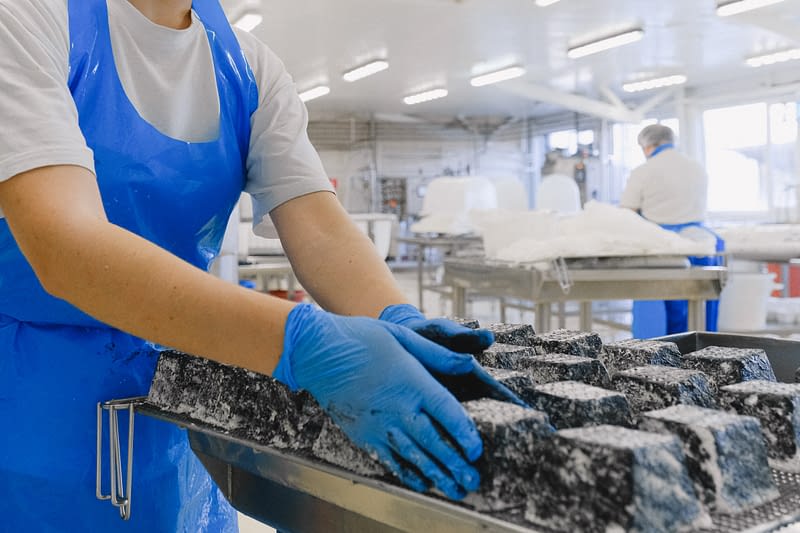
In the food manufacturing industry, Lead Time isn’t just a logistics KPI; it’s a race against the clock. For a Small or Medium Enterprise (SME), every hour a product spends in the “system”—from raw ingredient reception to the final customer delivery—is an hour where quality can degrade and capital remains frozen.

In food manufacturing, a long Lead Time doesn’t just mean a delay; it often means waste (waste/muda).

Why Lead Time is Critical for Food SMEs

Unlike other sectors, food SMEs deal with shelf-life constraints and stringent safety regulations. A bloated Lead Time in this environment leads to:

  • Increased Spoilage: Higher risk of inventory expiring before it reaches the shelf.
  • Frozen Working Capital: Money trapped in “Work in Progress” (WIP) that could be used for growth.
  • Reactive Production: The inability to respond to sudden demand spikes or seasonal shifts.

3 Levers to Slash Lead Time on the Shop Floor

1. Optimize Changeovers (SMED): In food production, cleaning (washdowns) is the biggest Lead Time killer. Applying SMED (Single-Minute Exchange of Die) principles to sanitation processes can reduce downtime by 30-50%, allowing for smaller batches and faster throughput.

2. Synchronize Ingredient Sourcing: Your Lead Time is only as fast as your slowest supplier. SMEs must move away from “Bulk Buying” to “Strategic Replenishment,” ensuring that ingredients arrive just in time for production, reducing warehouse bottlenecks.

3. Eliminate the “Information Gap”: In many SMEs, orders sit on a desk for 48 hours before the plant floor even knows they exist. Digitizing the flow of information ensures that the Administrative Lead Time doesn’t kill your Production Velocity.

From Freshness to Liquidity

At UPKAIZEN, we don’t just look at the machines; we look at the Value Stream. Reducing Lead Time by 20% in a food plant typically results in a direct 10-15% increase in available cash flow within the first quarter.

Operational Excellence is the only way to ensure that “Fresh” also means “Profitable.”

Not ready to take the next step? Join our newsletter to receive the latest updates & insights on Operational Excellence.

Recent Posts
Ieva Kalve

Ieva Kalve

Associate Consultant

I believe that it is healthy laziness that moves the world and business forward, and I am always ready to help find the most effective and appropriate solutions concerning strategic and change management, as well as various efficiency solutions in office work.

As a practicing consultant in Latvia, I already have 20 years of experience in various fields related to the optimization of organizational management:

  • I can help with advice on implementing the Balanced Scorecard system,
  • I have experience in creating IT and document management system modernization strategies,
  • I am a certified European ergonomist, and therefore we can work together on modern office solutions that both increase work efficiency and create comfortable and health-friendly workplaces.


I am constantly updating my knowledge both informally – following everything new in my areas of competence, and also formally: I have master’s degrees in pedagogy, economics, nutrition science, and modeling of sociotechnical systems. In 2021, I was a full-time student again for 1 semester – at the University of Buffalo (USA).

It is this unique “set” that allows me to view various processes, trends, and organizational needs holistically, offering realistic and at the same time modern solutions.

I also share my experience with students of various Latvian universities, I have given lectures in Lithuania, Germany, and Moldova as part of the Erasmus+ program, as well as participated in the international Sail program.

I also like to conduct corporate training.

Antoine Hauger

ASSOCIATE CONSULTANT

Antoine is a marketing enthusiast with a deeper understanding of digital marketing.  

Having worked for SMEs and international groups, Antoine has gained deeper online marketing (B2B & B2C) experience in various industries like retail, automotive and software.

Being a Partner and Marketing Manager at a global software vendor in the open source segment enabled Antoine, on the one hand, to consult digital agencies to build up and extend relationships, increasing their client base and improving customer experience. And on the other hand, to build up his global marketing competencies (E-Mail/Social Media/Content/Event).

In his new role as Partner Marketing Manager, Antoine is responsible for the strategic & operative rollout of the partner marketing program to its worldwide partner network of 150+ members.