
Eradicating the 7 Muda: Streamlining Your Operations for Maximum Efficiency

Dive deep into the concept of 7 MUDA (7 WASTES) and learn actionable strategies to eradicate Manufacturing Waste from your operations.
Latest Updates & Insights
Trusted by Operational Excellence Professionals
Project Manager, OSF Digital
"A Supply Chain Management Guru. The technical assessments developed with real-life scenarios are top-tier. I learned a lot through this framework."
CEO, Paadio Consulting
"A great place to learn and grow. The methodology provides exceptional service through deep knowledge and strategic empathy."
Founder & Editor-in-Chief, Technics Publications
"High-quality educational frameworks and products. An excellent educator and expert in Supply Chain Management."
Operations Professional, Manufacturing Sector
"Highly informative for understanding concepts from end to end. It provides great illustration of what supply chain and logistics is all about."
Logistics Expansion Director, International Trade & Retail.
"Very informative and provided the necessary tools to develop advanced skills and drive career improvement in operational excellence."
Connect with us

In today’s competitive landscape, companies are constantly seeking ways to optimize their operations and maximize efficiency. This relentless pursuit of improvement has led to the development of powerful tools and methodologies like Lean manufacturing. A cornerstone of Lean, the concept of 7 Muda (7 Wastes) plays a crucial role in identifying and eliminating non-value-adding activities within a process. By understanding and addressing these wastes, you can significantly improve productivity, reduce costs, and gain a competitive edge.

Muda: A Japanese Concept for Eliminating Waste

The word “Muda” is Japanese for “waste.” Introduced by Taiichi Ohno, a key figure behind the Toyota Production System (TPS), the 7 Muda framework focuses on identifying and eliminating these wastes to create a lean and efficient production system.

Understanding Value-Added Activities

Before diving into the 7 Muda, it’s essential to understand the concept of value-added activities. These are the essential steps in a process that directly transform raw materials into a product or service that meets customer needs. Customers are willing to pay for these activities. Conversely, non-value-added activities do not directly contribute to product value and are considered waste. These wastes consume resources, add cost, and can lead to delays.

The 7 Muda: Identifying and Eliminating Waste

Let’s delve into the seven categories of waste and explore strategies to eliminate them:

  1. Transport:

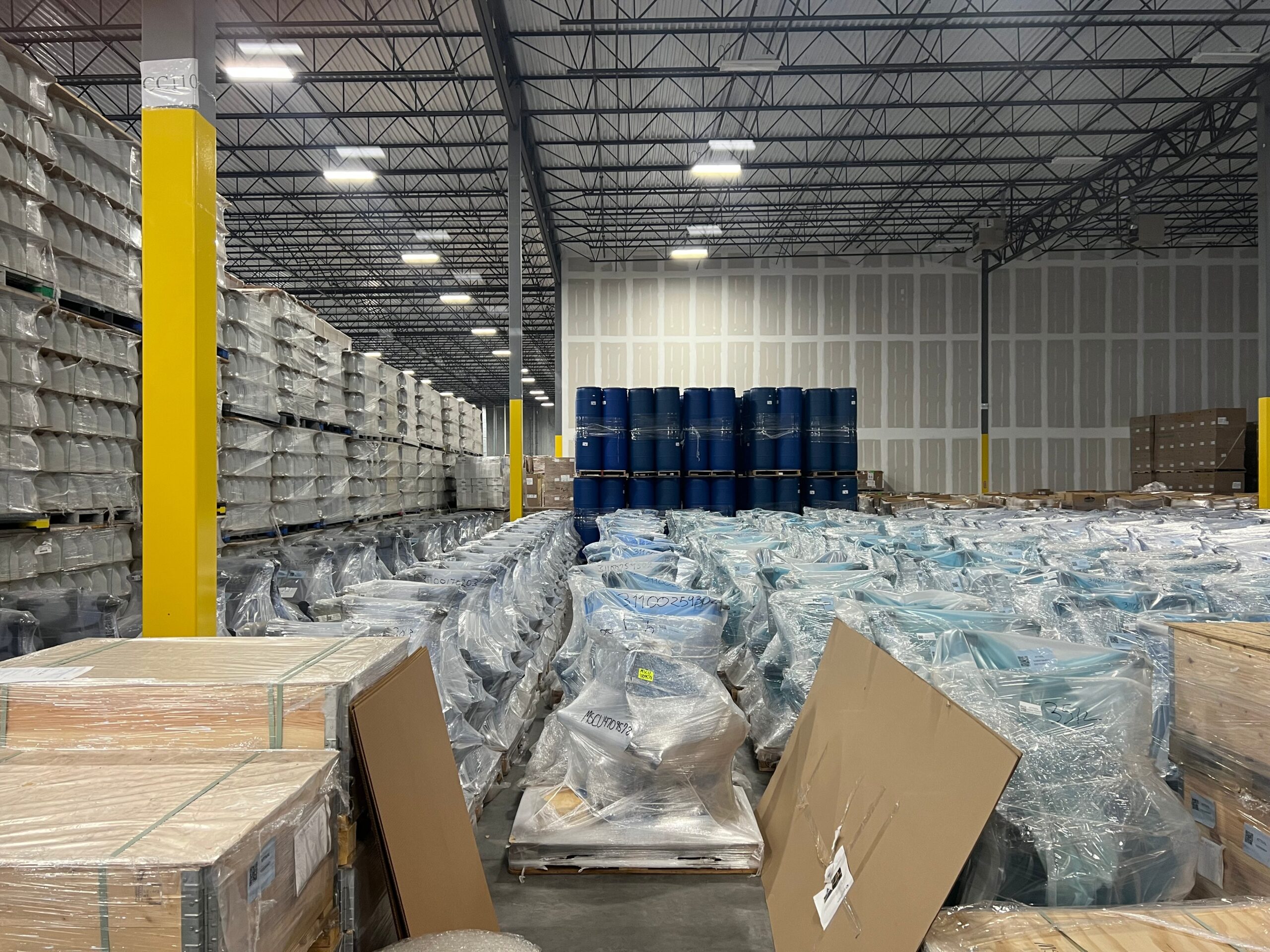
    The movement of materials or products from one location to another without adding value. This waste can manifest in poorly designed layouts, large production batches, long lead times, and inefficient transportation plans.

  • Solutions: Implement a transportation plan, review batch sizes and product flexibility, improve layout design, and optimize inventory placement.
  1. Inventory:

    Excess storage of raw materials, work-in-process (WIP), or finished goods. This ties up valuable resources, increases storage costs, and can lead to obsolescence or product degradation.

  • Solutions: Optimize inventory levels, reduce batch sizes and increase product flexibility, balance production processes, and improve logistics flexibility.
  1. Motion:

    Unnecessary movement of people, materials, or equipment within the supply chain. This can be caused by poor layout design, poorly maintained machinery, lack of appropriate tools, or frequent product relocation.

  • Solutions: Implement a 5S program (Sort, Set in order, Shine, Standardize, Sustain) to create a more organized workplace, improve layout design, enhance machinery maintenance, and optimize inventory levels.
  1. Waiting:

    Idle time for people or equipment due to process interruptions. This can be caused by waiting for materials, instructions, or machinery repairs.

  • Solutions: Improve communication flow, implement a man-machine analysis to optimize resource allocation, and create a smoother production flow.
  1. Over-processing:

    Performing unnecessary activities on a product or using excessive or inappropriate techniques. This can result from poor training, inadequate tools, or lack of defined procedures.

  • Solutions: Provide ongoing training to your team, promote a culture of continuous improvement, implement standard operating procedures (SOPs), and consider a Total Productive Maintenance (TPM) program to ensure proper equipment maintenance.
  1. Overproduction:

    Producing more than what is demanded by the customer. This leads to excess inventory, storage costs, and potential obsolescence.

  • Solutions: Align production volumes with customer demand, optimize batch sizes, and implement a Just-in-Time (JIT) production system.
  1. Defects:

    Production of poor-quality products that require rework or scrapping. This wastes resources, time, and can damage customer satisfaction.

  • Solutions: Implement SOPs to ensure process consistency, adopt Six Sigma methodologies for continuous quality improvement, and foster a culture of teamwork to identify and address quality issues proactively.

Eliminating Waste Through Kaizen

Kaizen, a Japanese philosophy meaning “continuous improvement,” is a cornerstone of Lean manufacturing. By implementing Kaizen, companies can actively identify and address the 7 Muda. Encourage your team to recognize value-added activities and identify areas for waste reduction. By fostering a culture of continuous improvement and problem-solving, you can continuously eliminate waste and enhance your overall efficiency.

Reduce waste in your Supply Chain

Unleash peak efficiency with the 7 Muda, a powerful Lean tool that eliminates waste and streamlines operations. Start your journey to long-term success today with our self-paced training program on implementing the 7 Muda. 

Conclusion

While the 7 Muda framework provides a powerful tool for eliminating waste, it’s an ongoing process. Embrace continuous improvement, collaboration, and data-driven decisions to transform your operations for long-term success. In today’s competitive environment, efficiency is essential for prosperity.

Operational Excellence Enthusiasts

Join our community of like-minded Operational Excellence enthusiasts and subscribe to our newsletter for the latest trends, expert insights, and exclusive content delivered straight to your inbox. Let’s connect, explore and discover excellence in every step.

Interested in spreading the word about your business or startup that helps companies be more efficient?

Contact us!


Share this insight

Recent Posts
Ieva Kalve

Ieva Kalve

Associate Consultant

I believe that it is healthy laziness that moves the world and business forward, and I am always ready to help find the most effective and appropriate solutions concerning strategic and change management, as well as various efficiency solutions in office work.

As a practicing consultant in Latvia, I already have 20 years of experience in various fields related to the optimization of organizational management:

  • I can help with advice on implementing the Balanced Scorecard system,
  • I have experience in creating IT and document management system modernization strategies,
  • I am a certified European ergonomist, and therefore we can work together on modern office solutions that both increase work efficiency and create comfortable and health-friendly workplaces.


I am constantly updating my knowledge both informally – following everything new in my areas of competence, and also formally: I have master’s degrees in pedagogy, economics, nutrition science, and modeling of sociotechnical systems. In 2021, I was a full-time student again for 1 semester – at the University of Buffalo (USA).

It is this unique “set” that allows me to view various processes, trends, and organizational needs holistically, offering realistic and at the same time modern solutions.

I also share my experience with students of various Latvian universities, I have given lectures in Lithuania, Germany, and Moldova as part of the Erasmus+ program, as well as participated in the international Sail program.

I also like to conduct corporate training.

Antoine

Antoine Hauger

ASSOCIATE CONSULTANT

Antoine is a marketing enthusiast with a deeper understanding of digital marketing.  

Having worked for SMEs and international groups, Antoine has gained deeper online marketing (B2B & B2C) experience in various industries like retail, automotive and software.

Being a Partner and Marketing Manager at a global software vendor in the open source segment enabled Antoine, on the one hand, to consult digital agencies to build up and extend relationships, increasing their client base and improving customer experience. And on the other hand, to build up his global marketing competencies (E-Mail/Social Media/Content/Event).

In his new role as Partner Marketing Manager, Antoine is responsible for the strategic & operative rollout of the partner marketing program to its worldwide partner network of 150+ members.